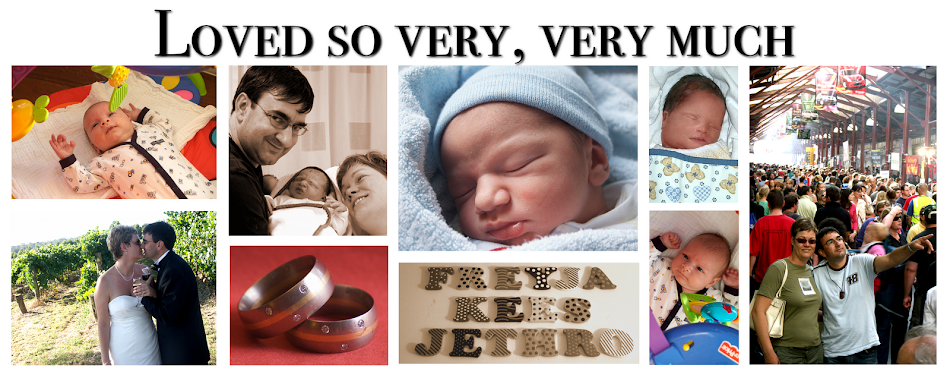
I never really used to know what that meant.
:::
noun
1 [mass noun] the art of representing three-dimensional objects on a two-dimensional surface so as to give the right impression of their height, width, depth, and position in relation to each other.
the appearance of viewed objects with regard to their relative position , distance from the viewer, etc.:a trick of perspective
[count noun] a view or prospect.
Geometrythe relation of two figures in the same plane, such that pairs of corresponding points lie on concurrent lines , and corresponding lines meet in collinear points.
2 a particular attitude towards or way of regarding something; a point of view:most guidebook history is written from the editor's perspective
[mass noun] true understanding of the relative importance of things ; a sense of proportion:we must keep a sense of perspective about what he's donethough these figures shock, they need to be put into perspective
3 an apparent spatial distribution in perceived sound.
:::
I majored in history in my undergraduate degree at university.
Perspective is much easier to understand when looking at history.
It's much easier to put things into perspective when you are not personally involved. When you are much further away in time from events.
But the fact that you are not personally involved, and that you are not close in time to the events, often does not allow a person to put things into their "actual/true" perspective.
:::
How do you put grief into perspective?
I read lots of books after Freyja died. Books about grieving, books about death, books about children dying.
And they all said the same things.
** Everyone grieves differently.
** Everyone grieves for different periods of time.
** A baby's death causes by far more shock and grief, when compared to other deaths.
:::
Craig and I visited a friend last week. She had invited us for dinner.
We made the usual inane dinner conversation.
She made some comment about "some of us having to go to work every day", which I took as a criticism to our not going to work every day. That comment was rather surprising, but I let it go.
Then during dinner she told us about a colleague who has cancer. She told us some other stories about colleagues who have also been afflicted by tragedies.
I responded to these revelations with the usual, "how sad for them", but fortunately their child(ren) is(are) still healthy.
Whether children are healthy and alive is usually my measuring stick these days. A measuring stick for a fortunate life.
Anyway, she didn't like that answer. So she spent a considerable amount of time telling me (because Craig was staying out of the conversation) how this is a terrible, terrible thing to have happened to these people.
Somehow the conversation turned into one of comparison. My obvious comparison is the loss of my three children. But apparently that's not a "suitable" comparison, according to my friend.
Craig put his two-cents in. He said that when he had cancer, he thought that was the most terrible thing that could happen to him. But he got past that. Then he found out his wife was cheating on him, and he went through a divorce. He thought that was the most terrible thing that could happen to him. But he got past that. Then Freyja died. And the thought that was the most terrible thing that could happen to him. Then Kees died. And then Jet died. You get the point. His perspective changed. His idea of what was "worst" or "badder" changed.
When does it end?
And when will someone who has not lost a child simply admit that they do not know how we feel? When will they stop trying to come up with stupid "stories" which will (they hope) prove us wrong?
When will they accept that it's not a comparison, but a perspective.
Craig's example is a good one. His experience in life at the time at which he got cancer, meant that in his perspective, his cancer was the worst thing that could happen to him. And he was right. At that time in his life, his cancer was by far the worst thing that could happen to him. Similarly, when his (first) marriage fell to bits, he thought it again.
He did not know that only a few years later, much, much worse would happen. His perspective would change so much, and he didn't even know it.
When someone comes up to me and says, "I know how you feel, because my sister-in-law's mother died suddenly the other day", it's not because they are stupid. It is because they are comparing grief, and are wanting to show me that we have something in common. What they don't have is perspective.
Our friend, who we had dinner with, had a fiance who died suddenly more than a decade ago. She grieved for many years. I think she grieves still - for his lost life, for her lost life as his wife. We noticed on our recent visit, that the photos she used to keep of him and his family, are no longer displayed in the living area. I wonder where she has put them now.
I will never be able to do that. Put away my children's photos. They will always be on display.
:::
Most people become quite voluble when you appear to "compare" your grief to theirs. But I can only say to them, it's not a matter of comparison. It's perspective.
For instance, my perspective is very different to a baby-lost mum's who has three living children. Without a doubt.
:::
So can anyone put grief into it's true perspective?
I doubt it. Unless you walk in someone's shoes, it is not possible to feel what they feel, or to suffer what they suffer.
I doubt that I will meet many people during my lifetime who will have the same perspective as me.
:::
Craig and I went to see a psychologist the other day. To discuss various issues which have arisen. As a result of three dead children.
Our psych had received some background information from our GP. Our GP had told me he would give her some information about us. And when we arrived, the psych confirmed she had received background information about us from him. So I assumed she would know. But I was wrong.
Within minutes of our conversation it was clear she did not have a clue of what actually happened to us. I asked her what she had been told. She said (and I apologise for the grammar, but this is literally what she said): "She had been told that three times we had not got a baby."
What the f*ck??? You could have knocked me over with a feather. My blood started boiling immediately.
(Note to self: do not trust GP's - ever. No matter how good and trustworthy they appear.)
I explained to her that, actually, we had "gotten" our three babies. But that they died. All three of them. For no reason. I had to tell her that several times - the no reason bit - because she didn't seem to believe us. She even asked us if our babies "looked normal". You'd figure that if I've said to her that the post-mortem investigations showed no abnormalities, that our babies would look pretty normal. But no. It had to be stated specifically several times.
(Actually, I don't think people in general believe us. No-one believes us that nothing was wrong with our babies. They think we are lying. That we covering up something horrible or something. What a laugh! Don't they realise I'd give just about anything to find out why our children died??? Bloody fools.)
So that was our psych session off to a very bad start.
Wonder what next week's session will be like?